Share
Investors who already own a plot often see engaging an architect as the natural next step – yet everything that comes before the first drawing determines what the project can actually be, in what dimensions and under what conditions. An architect who understands the full development process, not just the design phase, can at this stage identify problems before they become costly, raise questions the investor may not yet have thought to ask, and lay the groundwork for a project that will hold up through every phase of development. Below are the key steps we work through with an investor before design begins.
What the site allows
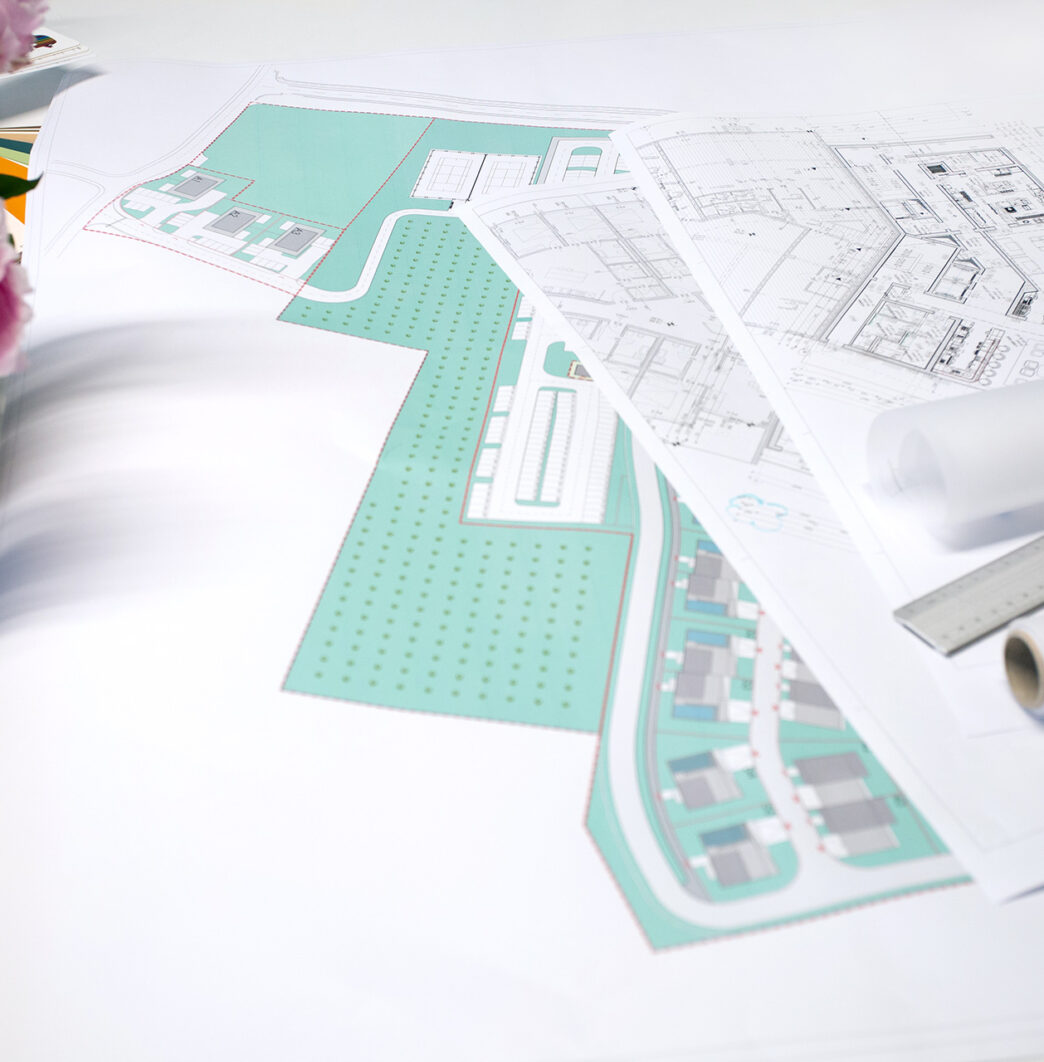
Every plot comes with its own set of conditions – spatial plan, land use designation, floor area ratios, height limits, setback requirements – all of which define what can be built on that site and in what dimensions. An architect who knows these conditions can tell the investor immediately what is realistic and what is not, without time spent on ideas that the regulatory framework would not permit in any case.
Legal title is a prerequisite for everything
Before design can begin, ownership must be clear. Encumbrances, co-owners, unresolved inheritances or disputed title registration can halt a project at a stage when both time and money have already been invested. An experienced architect knows what to flag and can coordinate the review with the legal team, since every problem identified in later stages of development brings with it both greater cost and longer timelines.
Infrastructure determines feasibility
The availability of connections to water, sewage, electrical and road infrastructure is not a minor detail – it is one of the fundamental conditions of a project’s feasibility. Obtaining statements of connection capacity and understanding the conditions and timelines under which those connections can be secured is work that has a direct bearing on the total project cost and its development schedule.
Financial logic before the first drawing
A feasibility study answers the question every investor must ask before anything else: does this project make sense in this form, on this site, in these market conditions? Estimated construction cost, modelled return, financial logic – all of this must be clear before the architect draws a single line. A project that starts without that picture often finds itself, in later stages, facing decisions that could have been made far earlier and far more cheaply.
The project brief as an architectural decision
What is being built, for whom and in what proportions is as much an architectural question as an investment one. A residential project without an understanding of market absorption, a hospitality development without knowledge of the local context, commercial space without an analysis of demand – all carry the same risk. An architect involved in defining the brief from the outset ensures that what gets drawn responds both to the regulatory conditions and to the genuine needs of the project.
Each of these steps – regulatory conditions, legal title, infrastructure, financial logic and the project brief – is part of a process we work through with the investor at Lotus before design begins. Architecture that is not grounded in these foundations, however well drawn, is harder to deliver, harder to finance and harder to keep true to what was originally envisioned.